Resource Management & Outsourcing

Extend your technology capabilities without expanding operational complexity. Managed Outsourcing IT outsourcing & dedicated development teams

Access skilled technology professionals, dedicated teams, and managed delivery capabilities while Sumago manages the people, infrastructure, supervision, and delivery operations behind them.

Understanding the discipline

Build capacity without building the entire operation.

Resource management and outsourcing provide a flexible way to expand technology capabilities while maintaining control over cost, quality, and delivery.

Whether you need a specialist for a specific role, a dedicated engineering team, or an end-to-end managed delivery function, the engagement can be aligned to your business requirements.

  • Access talent faster without extended hiring cycles.

  • Turn multiple operational costs into a structured engagement.

  • Scale capacity as your roadmap and business demand change.

  • Build continuity beyond individual resources.

Resource augmentation

Add individual technology professionals to address skill gaps, increase delivery capacity, or support specific project requirements.

Dedicated team

A team of engineers, QA specialists, designers, analysts, and technical leads works around your product roadmap and delivery objectives.

Managed outsourcing

Sumago takes broader responsibility for team management, delivery governance, quality, reporting, and operational execution against agreed objectives.

The business case

Why businesses invest in managed outsourcing.

Returns that show up on the business, not on the engineering backlog.

  • 01

    Access talent faster

    Access vetted technology professionals and delivery teams based on technical skills, experience, and project requirements.

  • 02

    Improve cost predictability

    Reduce the overhead associated with recruitment, infrastructure, workspace, employee administration, supervision, and resource management.

  • 03

    Scale with business demand

    Adapt team size, roles, and technical expertise based on project phases, delivery requirements, and business priorities.

  • 04

    Reduce delivery risk

    Dedicated resources are supported by a wider technical ecosystem, helping address complex challenges, resource availability, and knowledge continuity.

What we build & capabilities

The things you can commission — and what each one ships with.

Defined engagements, one at a time: the thing itself on screen, and the capabilities that come with it.

01 / 05

Software engineering

Develop, enhance, and maintain applications across modern technology stacks with dedicated engineering capacity.

Capabilities

  • Application development
  • Modern technology stacks
  • Product enhancement
  • Ongoing maintenance
  • Dedicated capacity

Business outcomes

Where the business is today, and what changes.

The operational difference, in the terms the business already measures itself in.

Long recruitment and hiring cycles
Faster access to qualified technology professionals
Difficulty finding specialised skills
Access to a broader multidisciplinary talent pool
Fluctuating project requirements
Flexible capacity that can scale with demand
Increasing operational overhead
A structured and predictable engagement model
Dependency on individual contributors
Team-level support and knowledge continuity

Faster time to capacity

Predictable costs

Greater flexibility

Reduced delivery risk

Focus on core business

Industries we serve

The same discipline, shaped to your sector.

Regulation, procurement and legacy estate differ by industry — and the engagement is shaped around them, not in spite of them.

  • Software & Product Companies

    Typical use case

    Extend engineering capacity, accelerate product development, or access specialised expertise without disrupting the existing technology organization.

  • Startups & Scale-ups

    Typical use case

    Build technology capabilities quickly while maintaining flexibility and avoiding the fixed operational burden of a large internal engineering organization.

  • Enterprises

    Typical use case

    Support transformation programs, technology modernization, application development, and non-core technology functions under structured governance.

  • Agencies & Consultancies

    Typical use case

    Expand delivery capacity based on project demand without maintaining a large permanent workforce between engagements.

  • Financial Services

    Typical use case

    Access technology and engineering capabilities for digital platforms, application modernization, integrations, automation, and technology operations.

  • Healthcare & Other Regulated Industries

    Typical use case

    Extend technology teams while maintaining structured processes, documentation, governance, and delivery oversight.

Our engineering process

How the engagement actually runs.

Every stage has an owner, an output, and a point where you can change direction.

  1. 01

    Understand requirements

    Define the business objective, project scope, required skills, technology stack, seniority, responsibilities, and expected outcomes.

  2. 02

    Define the engagement

    Determine the most appropriate model — resource augmentation, dedicated resource, dedicated team, or managed outsourcing.

  3. 03

    Identify the right talent

    Evaluate professionals based on technical capability, relevant experience, domain knowledge, and project fit.

  4. 04

    Evaluate & onboard

    Complete technical evaluation and integrate selected resources into your tools, processes, technology environment, and delivery workflows.

  5. 05

    Deliver & monitor

    Execute against agreed priorities with transparent progress tracking, communication, reporting, and quality processes.

  6. 06

    Review & optimise

    Regularly review performance, delivery progress, resource requirements, and emerging risks to ensure continued alignment.

  7. 07

    Scale as required

    Increase, reduce, or restructure the team as project requirements, business priorities, and delivery needs evolve.

Why Sumago

Why teams choose Sumago.

The technology partner serious businesses build with — and stay with.

Proven technology expertiseStructured resource managementMultidisciplinary supportTransparent reportingFlexible engagement models

Proven technology expertise

Access professionals across engineering, design, QA, cloud, AI, business analysis, and technical leadership.

Structured resource management

Defined processes for resource selection, onboarding, performance management, knowledge sharing, and continuity.

Multidisciplinary support

Dedicated resources are backed by architects, engineers, QA specialists, designers, analysts, and technology experts.

Transparent reporting

Clear communication, progress visibility, performance tracking, and regular reporting throughout the engagement.

Flexible engagement models

Choose the level of support that matches your requirements — from individual resources to fully managed delivery teams.

Business-first approach

Business objectives and operational requirements shape the right technology and engagement model.

Engineering quality

Structured development, QA, documentation, code review, and delivery practices support reliable, scalable outcomes.

Long-term partnership

Support immediate capacity requirements as well as long-term technology growth.

Technology ecosystem

Mainstream technology, chosen so you can hire for it later.

The stack is a means, not a position. It gets chosen against your constraints — and it stays maintainable by people who aren't us.

Software engineeringQuality engineering & QAUI/UX designBusiness analysisCloud & DevOpsAI & automationTechnical leadership
  • Slack

Proof of work

Work that has already shipped.

Real engagements, named clients, and what changed for the business behind them.

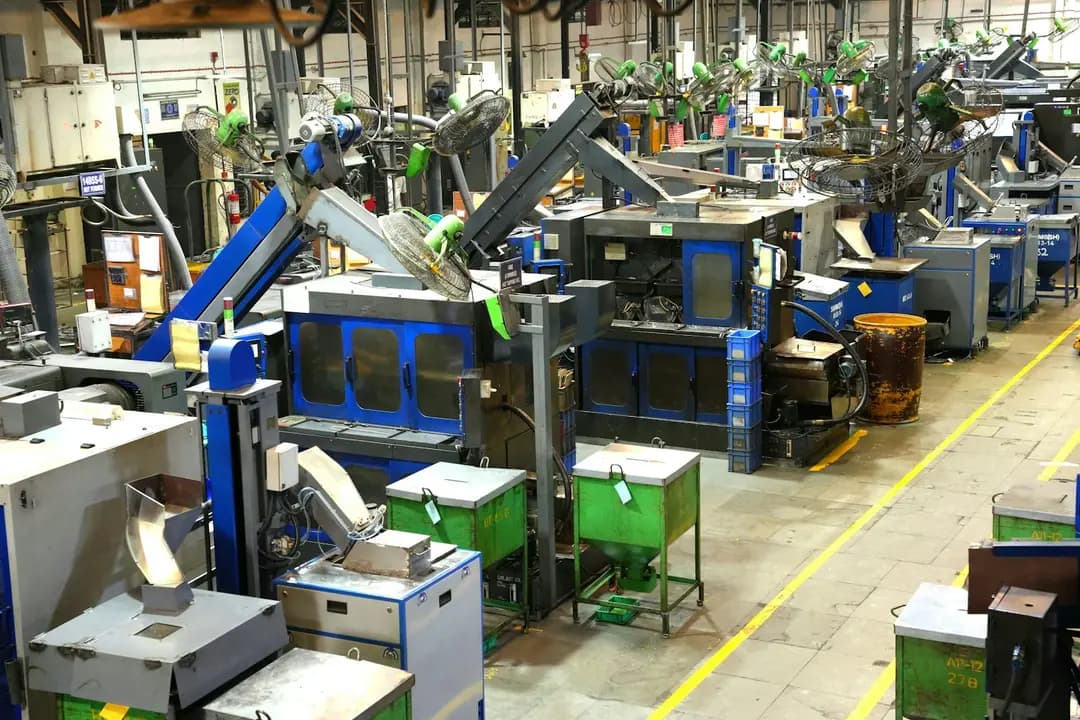
One Operating System for the Entire Manufacturing Operation
Manufacturing

One Operating System for the Entire Manufacturing Operation

Client challenge
For many manufacturers, the operation that keeps production supplied still runs on paper and disconnected spreadsheets. A department's need for materials is written down, walked between desks, and delayed; stock levels are guessed at; vendor quotes live in inboxes; goods arrive with no one certain what was ordered; and finance pays against documents it has to hunt for. Every handoff invites delay, error, and lost accountability — and the cost surfaces as stalled production, capital trapped in excess inventory, and leaders making decisions on information that is already out of date.
Our solution
An enterprise resource planning platform that unifies the entire procure-to-production lifecycle on a single, real-time system. From the first signal of a material need, through vendor sourcing and competitive quoting, purchasing, receipt, quality assurance, and payment, every step flows through one connected pipeline — with approvals and alerts moving automatically between production, purchasing, stores, quality, and finance. Each team works from the same live source of truth, and every material and every rupee is traceable from request to reconciliation. ### The platform One responsive web platform on a single shared backend, with a tailored view for every team in the operation: - **Production teams** — *raise material needs digitally* instead of on paper requisitions that get lost. *How it helped:* removed the delays and hand-offs that stalled the shop floor. - **Purchasing** — *source vendors, run competitive quotes, and issue purchase orders* through a controlled flow. *How it helped:* made procurement faster, standardized, and accountable rather than ad-hoc. - **Stores & inventory** — *receive goods, track real-time stock, and manage warehouse locations.* *How it helped:* ended both stockouts and trapped capital in overstock through live inventory visibility. - **Quality** — *inspect and formally accept goods before they enter production.* *How it helped:* ensured only verified material reaches the line, protecting output quality. - **Finance** — *pay vendors against matched, verified documents.* *How it helped:* removed payment errors and disputes by tying money to proof. - **Leadership** — *see the entire operation live* across every department. *How it helped:* moved decisions from month-end hindsight to real time. ### Architecture highlights - **Modular, domain-driven design** — procurement, inventory, quality, and finance are clean, independently evolvable modules over one shared data core. - **A single source of truth with transactional integrity** — every department reads and writes consistent, conflict-free records, so stock and status never disagree. - **Role-based access control (RBAC)** — granular permissions map each department to exactly the screens and actions it needs. - **Built-in audit trail** — every approval, material movement, and document is logged for end-to-end traceability and compliance. - **Workflow-and-approval engine** — business rules move work forward; authorization is enforced, not remembered. ### Technology stack Built on the **MERN stack** (MongoDB · Express.js · React · Node.js), giving each department a real-time, role-based web experience over one unified data layer.
Business impact
When the whole operation shares one system, materials arrive on time, capital stops sitting idle in overstock, and quality is assured before goods ever reach the line. Nothing is ordered twice or lost on arrival, every approval is accountable, and leadership sees the entire operation live rather than in month-end hindsight. A slow, error-prone paper chain becomes a fast, transparent operation — one built to scale as production and product lines grow, without a rebuild.

Enterprise Resource Planning · Workflow & Approval Automation · Real-Time Inventory Intelligence · Traceability · Vendor Management · Executive Reporting